Collecting and feeding within robot constraints
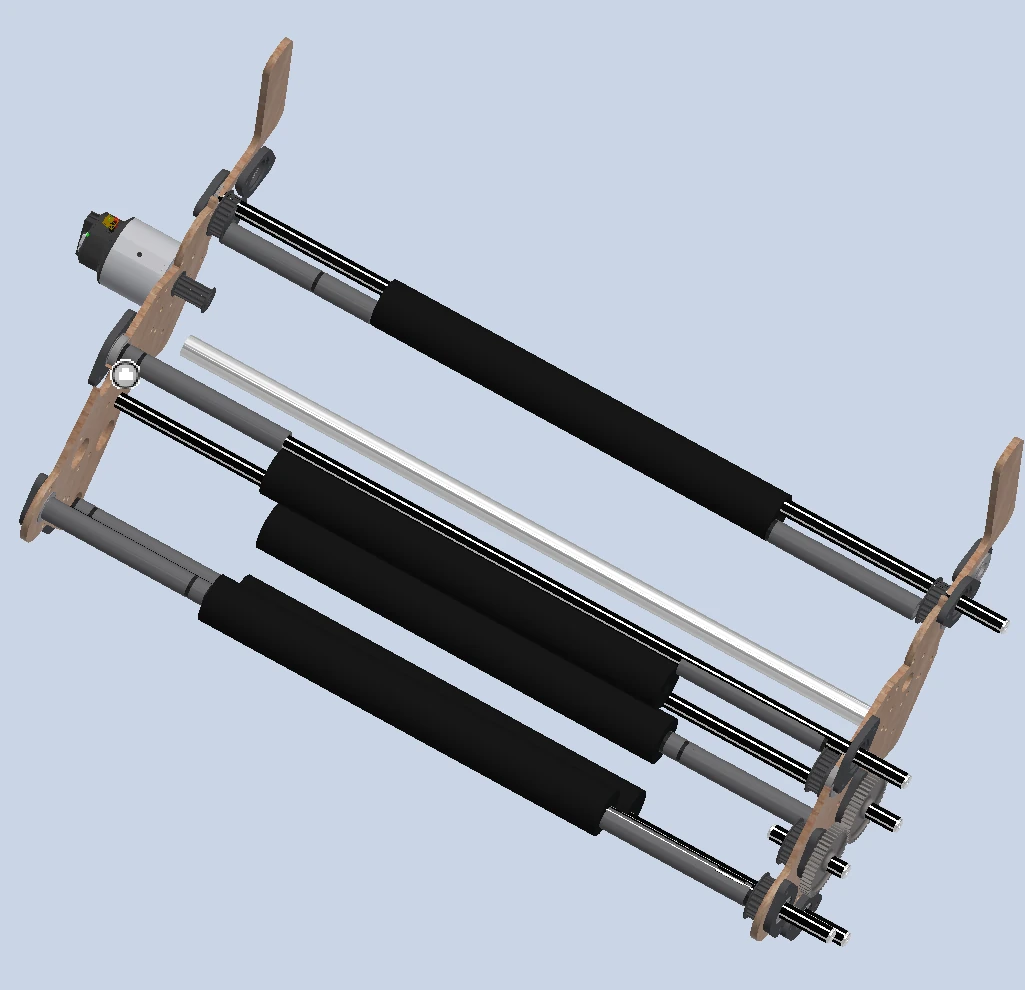
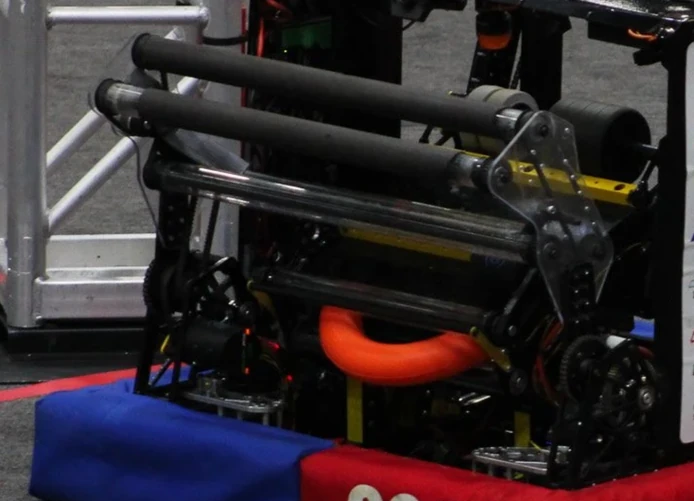
The 2024 CRESCENDO robot needed to acquire foam game pieces called NOTES and feed them directly into its shooter. The collector had to deploy quickly, meet frame-extension and stow constraints, and tolerate contact with the field and other robots.
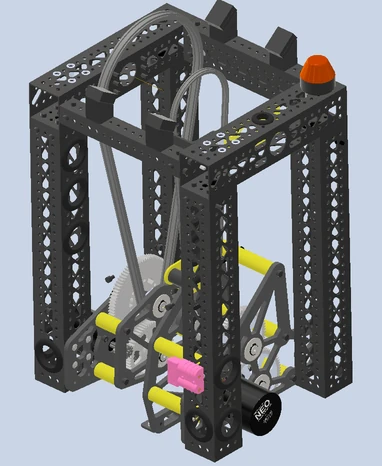
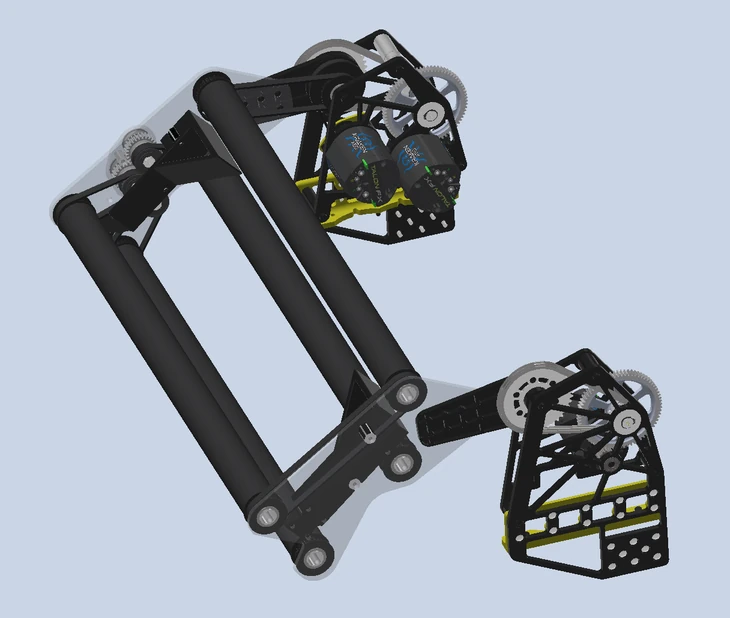
I owned the collector and gearbox system through geometry development, CAD, drive sizing, packaging, integration, and early competition iteration.
Sizing the deployment and roller drives
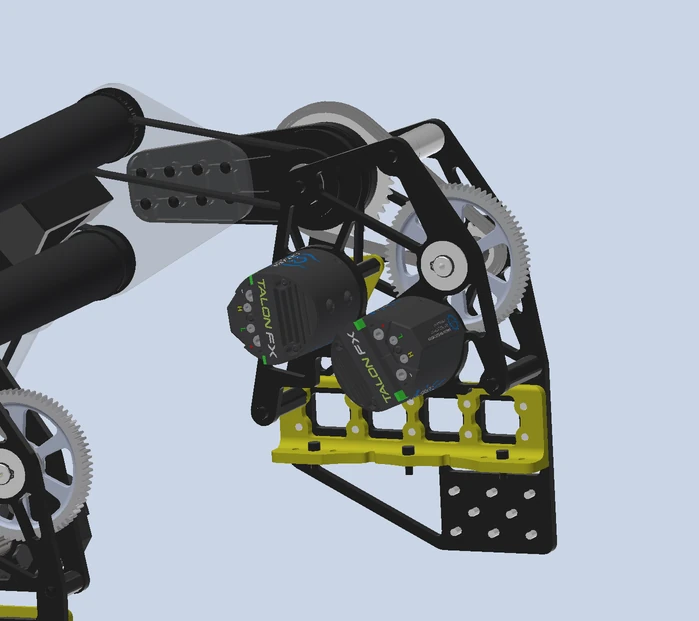
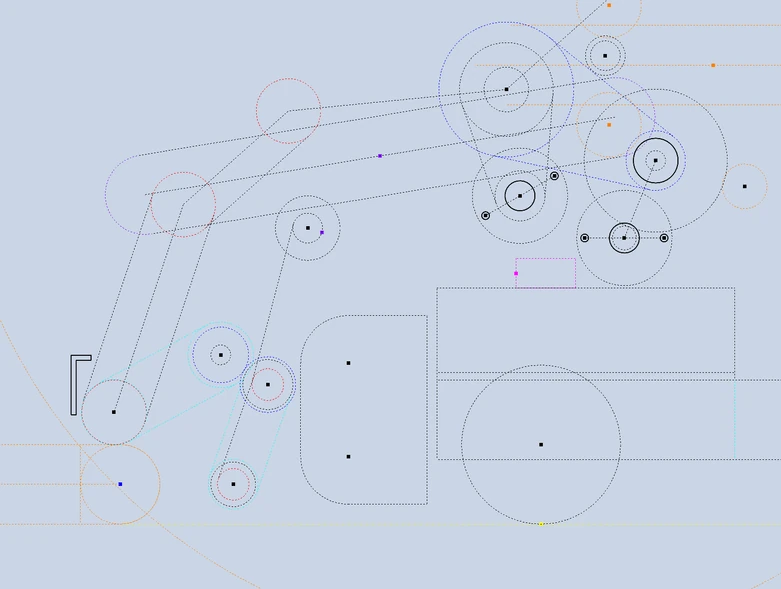
I sized the deployment and roller drives for torque and compared roller tangential speed with chassis speed. The intake needed to pull a game piece inward faster than the robot approached it. The design used an 18:1 reduction for deployment and a 2:1 reduction for the rollers.
Prototypes with different jobs
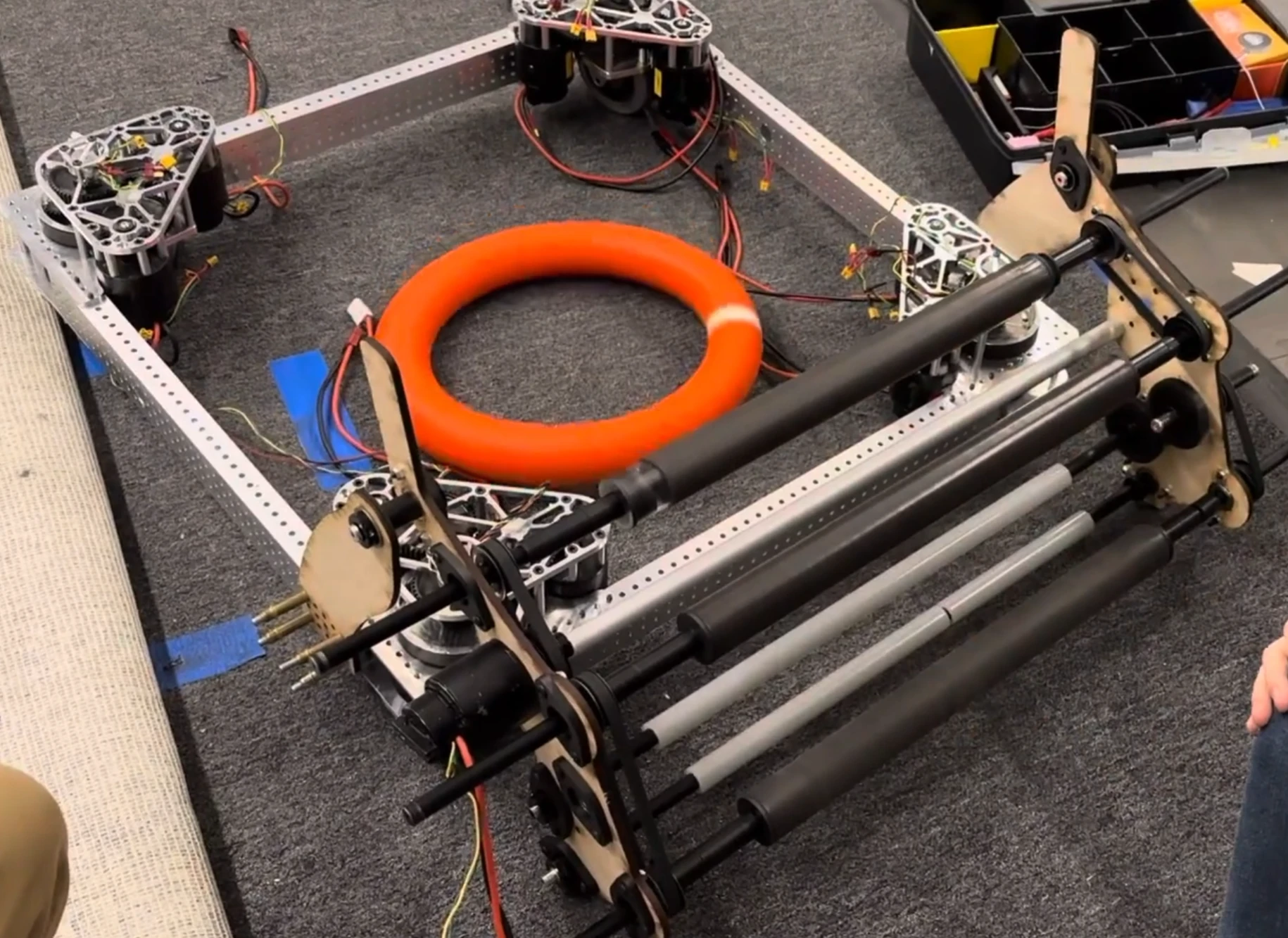
The alpha robot used laser-cut wood geometry prototypes. Testing at this stage helped tune roller placement before committing to the final structure.
The beta robot used near-final geometry to test packaging and integration. It exposed problems with the collector’s stowed position and the space available around it. Those findings informed the geometry used on the competition robot.
Learning from competition contact
Competition use revealed a further requirement for compliance to absorb impacts. Later versions incorporated that lesson. Each stage had answered a different question: whether the collector geometry worked, whether the assembly fit the robot, and how it behaved under competition contact.
This was the first project where I experienced iteration as a structured engineering process. Separating those questions made the purpose of each prototype clearer.