Replacing wire bonding within the existing package
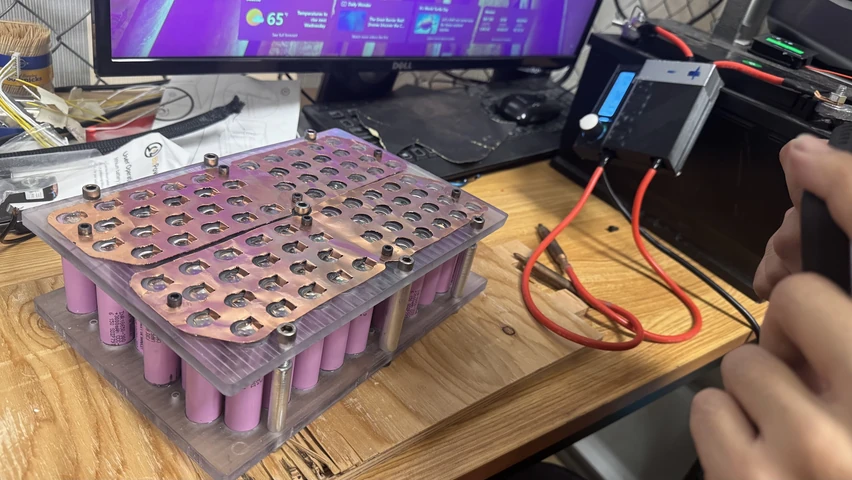
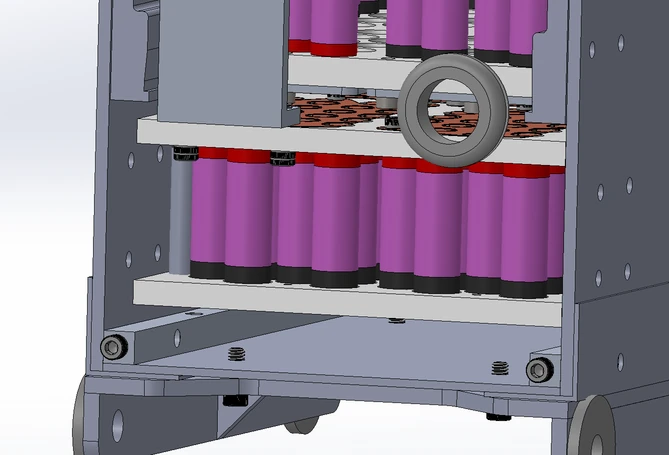
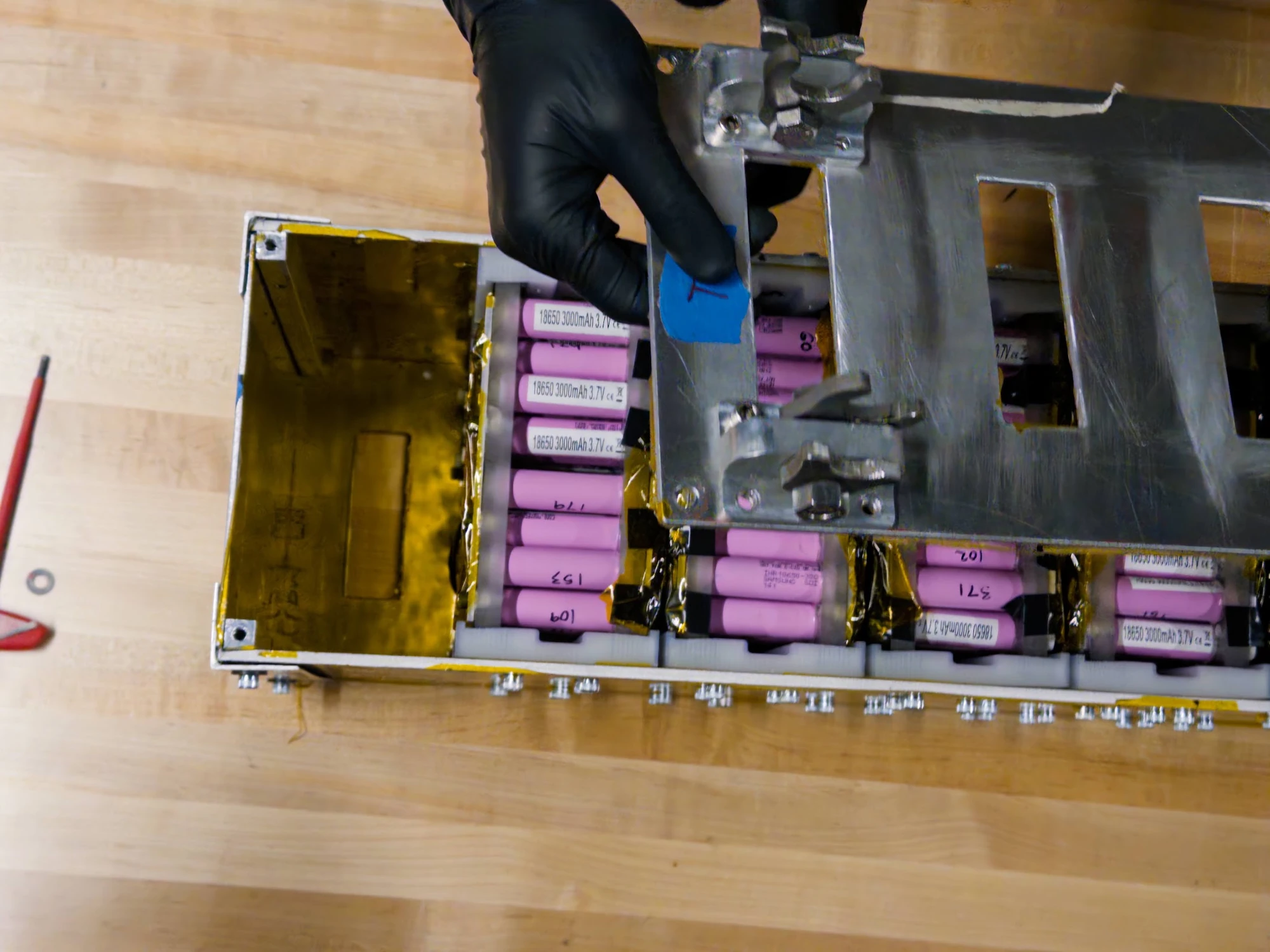
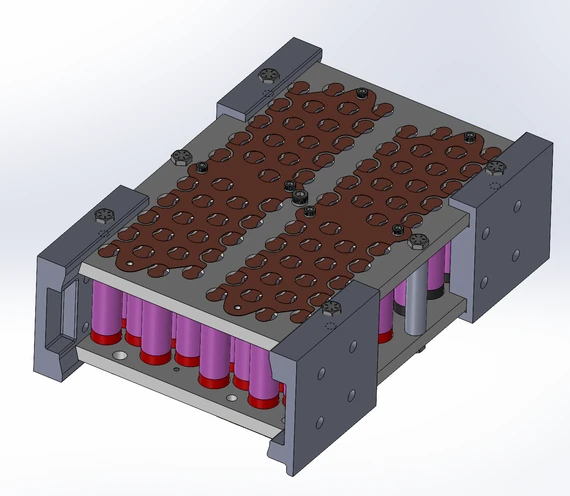
Washington Superbike needed a new manufacturing approach after losing access to wire bonding. The replacement module had to fit the same packaging envelope and use processes available in the team’s shop. The resulting 4S20P assembly held 80 Samsung 18650 cells.
Mechanical ownership and manufacturing decisions
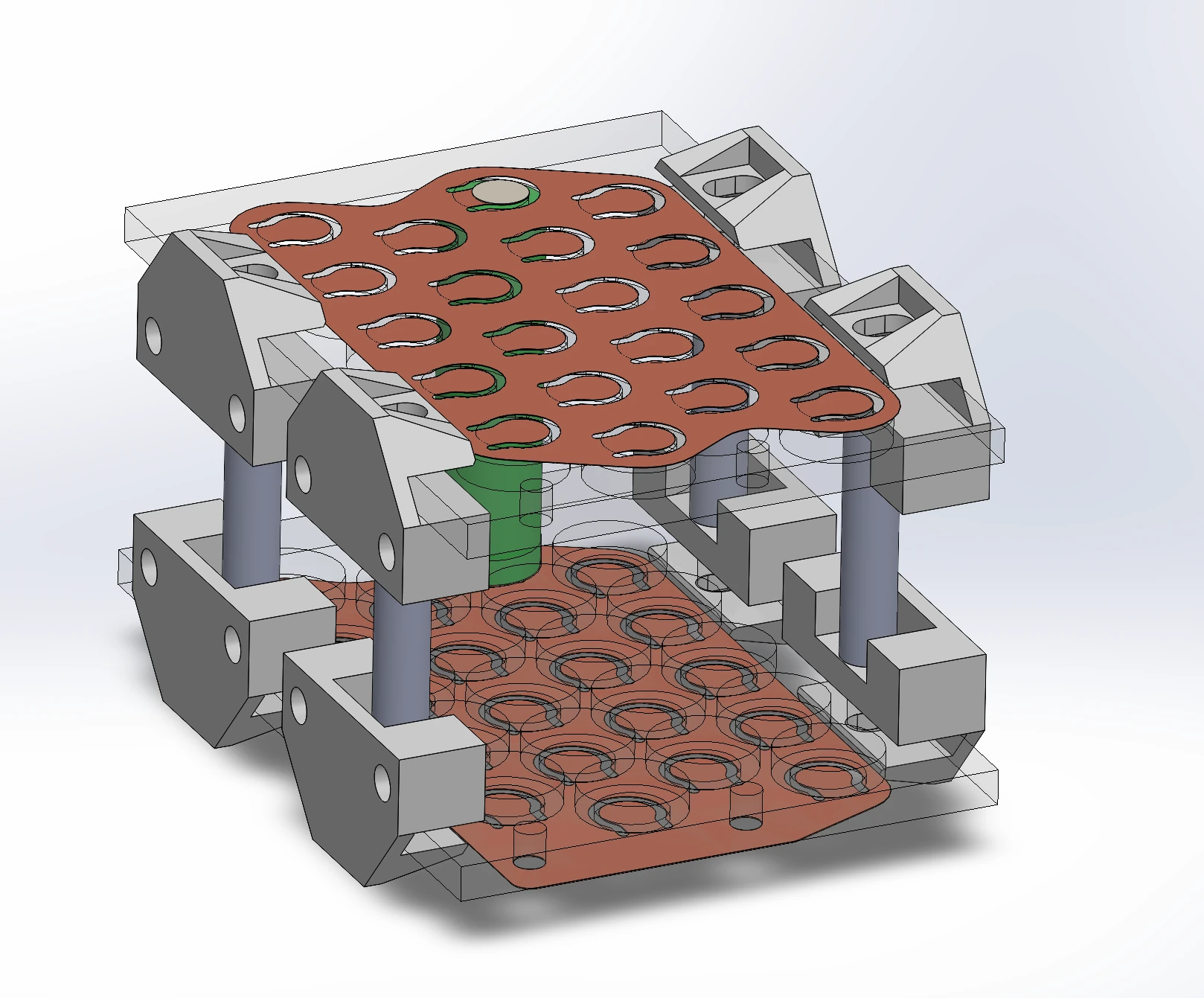
I owned the mechanical design in SolidWorks, including the structural plates, busbars, standoffs, and fastening strategy. I designed these parts around repeatable assembly, support under motorcycle inertial loads, and the available manufacturing processes. A teammate developed the spot-welder electrode clearances, which I incorporated into the assembly.
I learned CAM for the project and used a 2.5-axis router to machine the structural plates and thin copper parts. I also turned custom standoffs on a lathe. The project carried my mechanical design through manufacturing and assembly.
Validating assembly and welding access
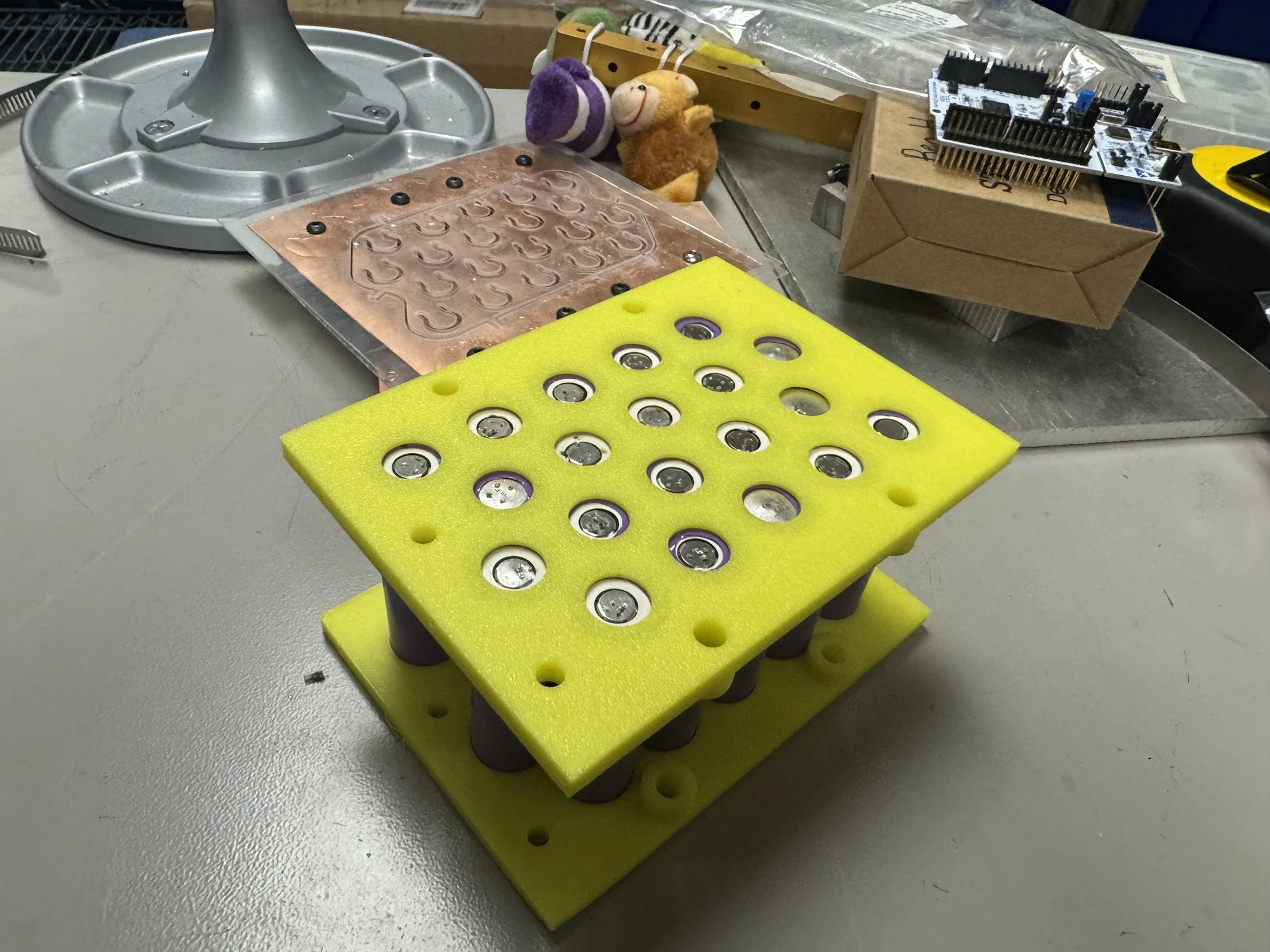
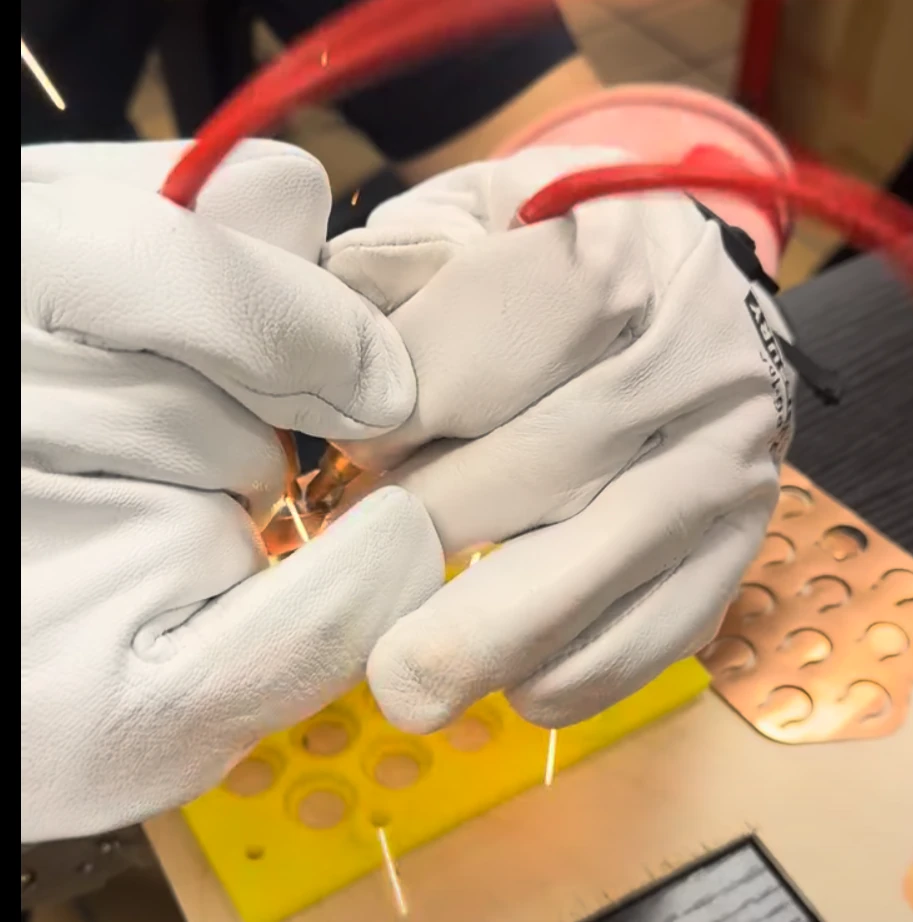
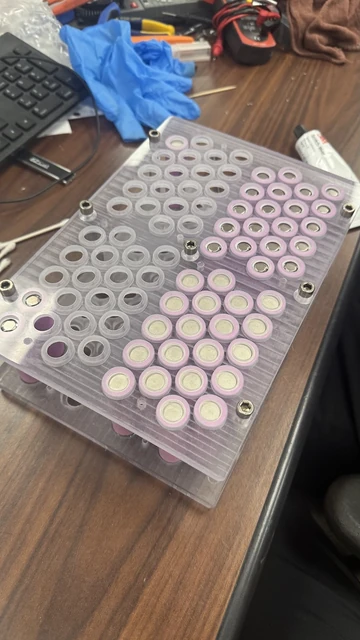
Before manufacturing the full module, I built a quarter-scale prototype to check assembly geometry, electrode access, and electrical continuity. This provided a physical check of the interfaces needed for spot welding before committing to the complete assembly.
I also used cell datasheets to establish a temperature operating window and coordinated a firmware shutdown limit with the electrical side of the team.
A repeatable build
A later second build used the same design and manufacturing process and reproduced the module’s fit and alignment. The project expanded my responsibilities beyond CAD into CAM, machining, assembly, and coordination between mechanical and electrical requirements.